
Assess, Repair & Grind
We test for moisture, repair cracks or spalling, then diamond-grind the slab through progressively finer grits.
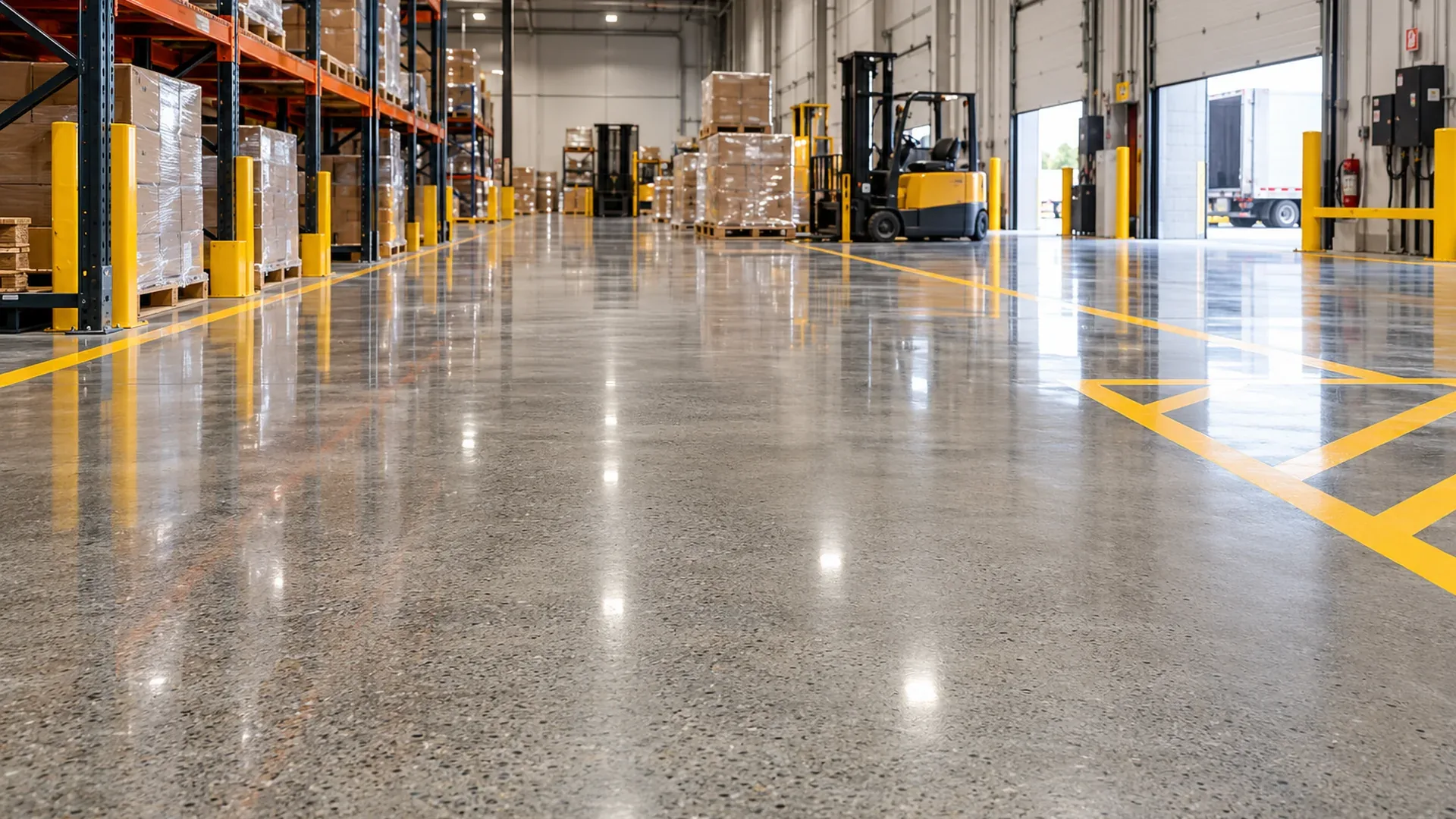
Level 1 matte through Level 4 high-gloss. Diamond-ground, densified, and polished to a specific, named finish — for homes, retail floors, and warehouses alike.
Most companies describe polished concrete as “matte to high-gloss” with no real scale to point to. We use a named Level 1–4 system so your estimate and your finished floor always match.
A flat, low-sheen ground finish. Common in industrial and warehouse floors that prioritize function and dust control over reflectivity.
A soft satin reflection with more depth than a honed finish. A common middle ground for offices and light-retail floors.
Noticeable reflectivity without a full mirror finish. The most requested level for showrooms, retail, and commercial kitchens.
A full, mirror-like reflective polish. The showroom-grade finish for lobbies, flagship retail, and homes that want a true statement floor.
No coordinating separate grinding, repair, and polishing crews. One team, one schedule, one warranty.

Diamond grinding with dust-collection equipment
We test for moisture, repair cracks or spalling, then diamond-grind the slab through progressively finer grits.
A silicate densifier hardens the slab, then we polish to your chosen Level 1–4 finish.
A guard/sealer topcoat locks in the finish. Final walk-through, and your 5-Year warranty in writing.
Final price depends on slab condition, existing coatings to remove, and any crack or moisture repair needed. Every quote is fixed and given in writing before we start.
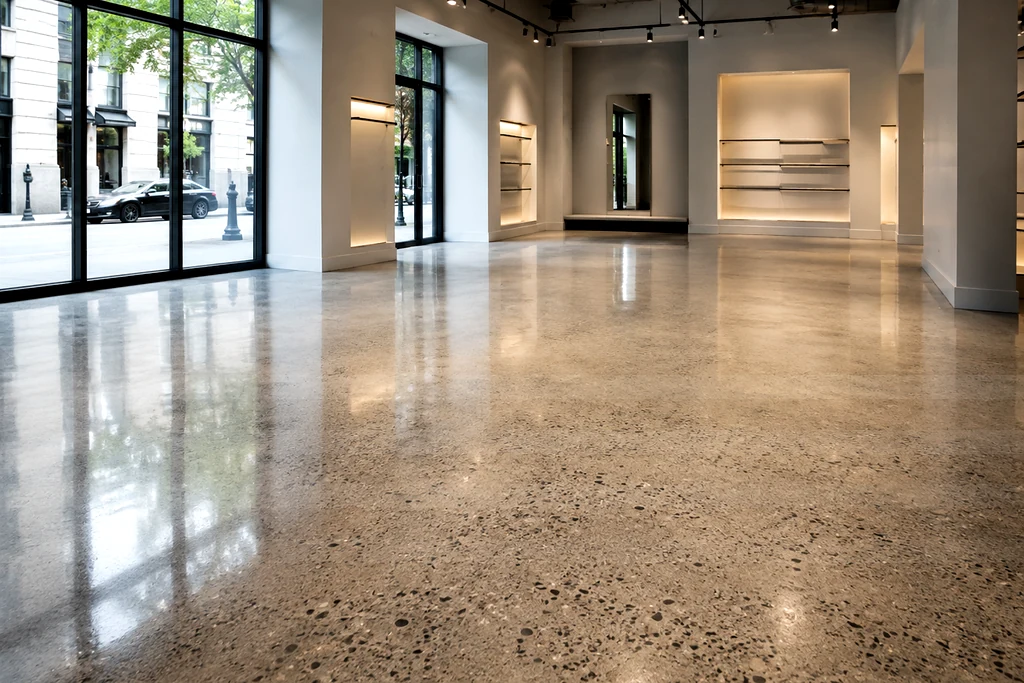
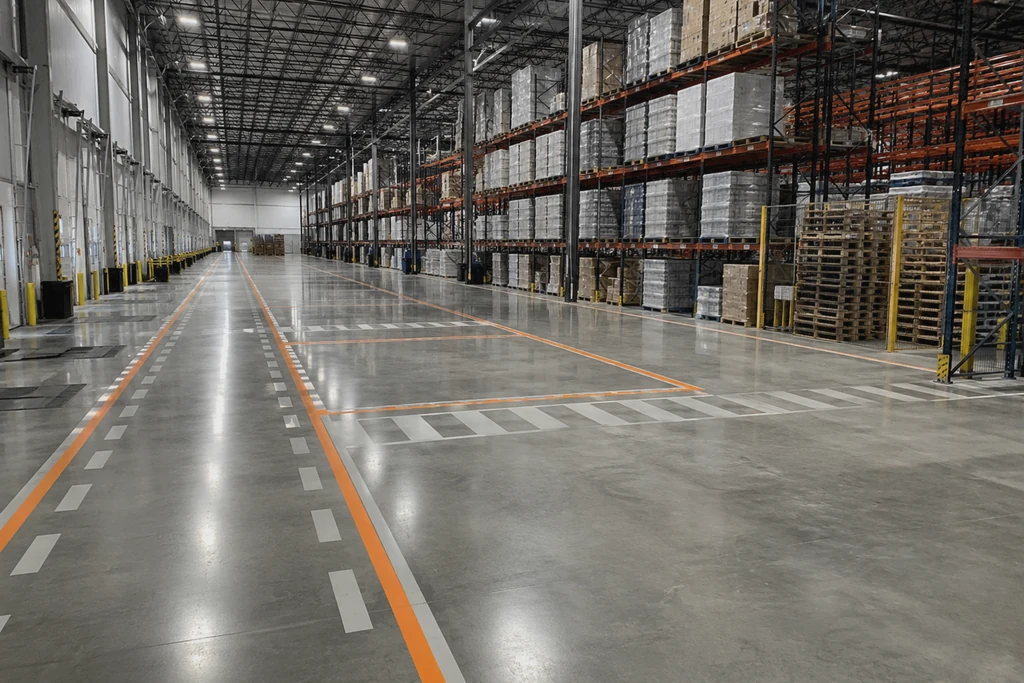
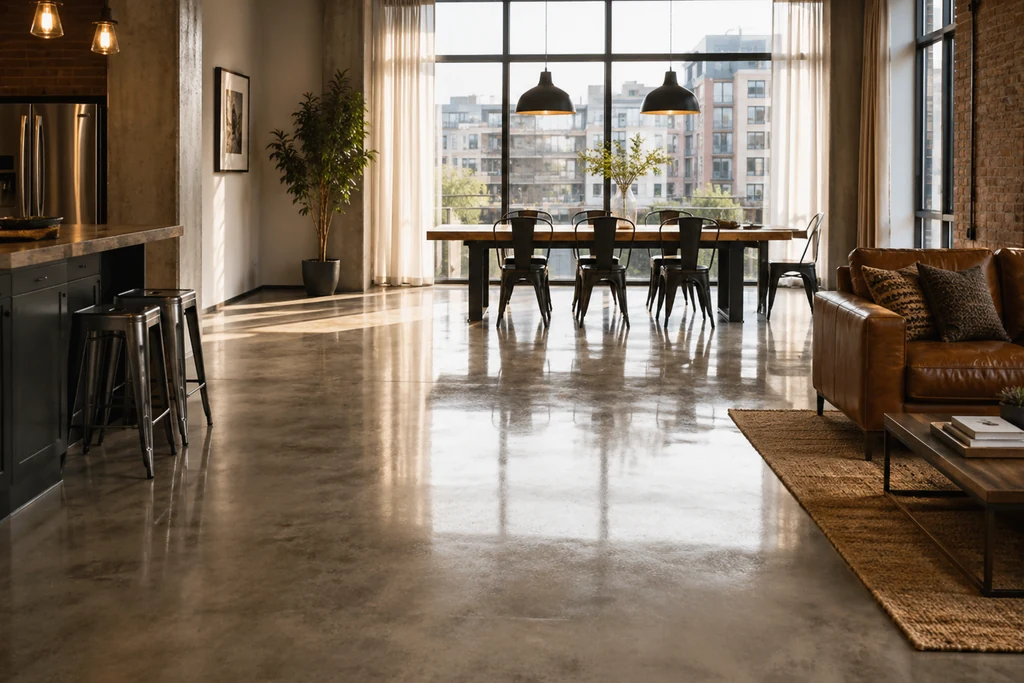
Warehouses and back-of-house areas usually do well with Level 1-2 for cost and function; retail, showrooms, and commercial kitchens often choose Level 3; lobbies and flagship spaces that want a true showpiece floor choose Level 4. We'll recommend a level at your free estimate based on how the space is actually used.
Not necessarily — gloss and slip resistance are separate properties. A slip-resistance additive can be broadcast into the topcoat at any finish level for wet areas or code-driven applications.
In most cases, yes — we grind through old coatings, adhesive, or tile as part of surface prep. We'll confirm feasibility once we've assessed the slab underneath.
Regular dust-mopping or auto-scrubbing with a pH-neutral cleaner, plus periodic diamond burnishing and guard/sealer reapplication every 1-3 years depending on traffic. No polished concrete floor is truly maintenance-free — we'll give you a real schedule for your finish level and traffic.
Yes — a 5-Year warranty, stated the same way across this entire site, with plain written exclusions.
See the directional per-square-foot pricing by finish level above — final cost depends on slab condition, existing coatings to remove, and any crack or moisture repair needed. Every quote is a fixed number given in writing before we start, not a bare estimate.
Yes — crack and spall repair, and removal of old tile, vinyl, or a failing coating, are handled as part of the same project, before we grind. We'll assess the slab and confirm what's feasible at your free estimate rather than guessing from a photo.
Polished concrete is a mechanical finish, not a wet coating, so light foot traffic can typically resume soon after the crew finishes for the day. If a guard coat or sealer topcoat is part of your finish, that layer needs its own cure time before heavier traffic or rolling loads — we'll walk you through the exact timing for your specific finish before we start.
Both are real options for a garage floor — we install both, so here’s the honest difference rather than a sales pitch for one over the other.
The existing concrete itself is diamond-ground and polished to a named Level 1–4 finish — no topcoat added.
A flake, metallic, or solid-color epoxy system is applied on top of the existing concrete rather than polishing it.
Tell us the space and how it's used, and we'll recommend a finish level and get you a written estimate.
 Every Concrete Finish. Every Industry. One Trusted OC Crew.
1-business-day response. No pressure, no obligation.
CSLB #PLACEHOLDER-000000 · Licensed & Insured
Need staining, sealing, or repair instead? See Staining, Sealing & Repair →